
5/3/1 AMRAP Sets: How to Use Them Correctly
Learn how to execute, interpret, and act on 5/3/1 AMRAP sets — from rep targets to training max decisions — without burning out or stalling your progress.
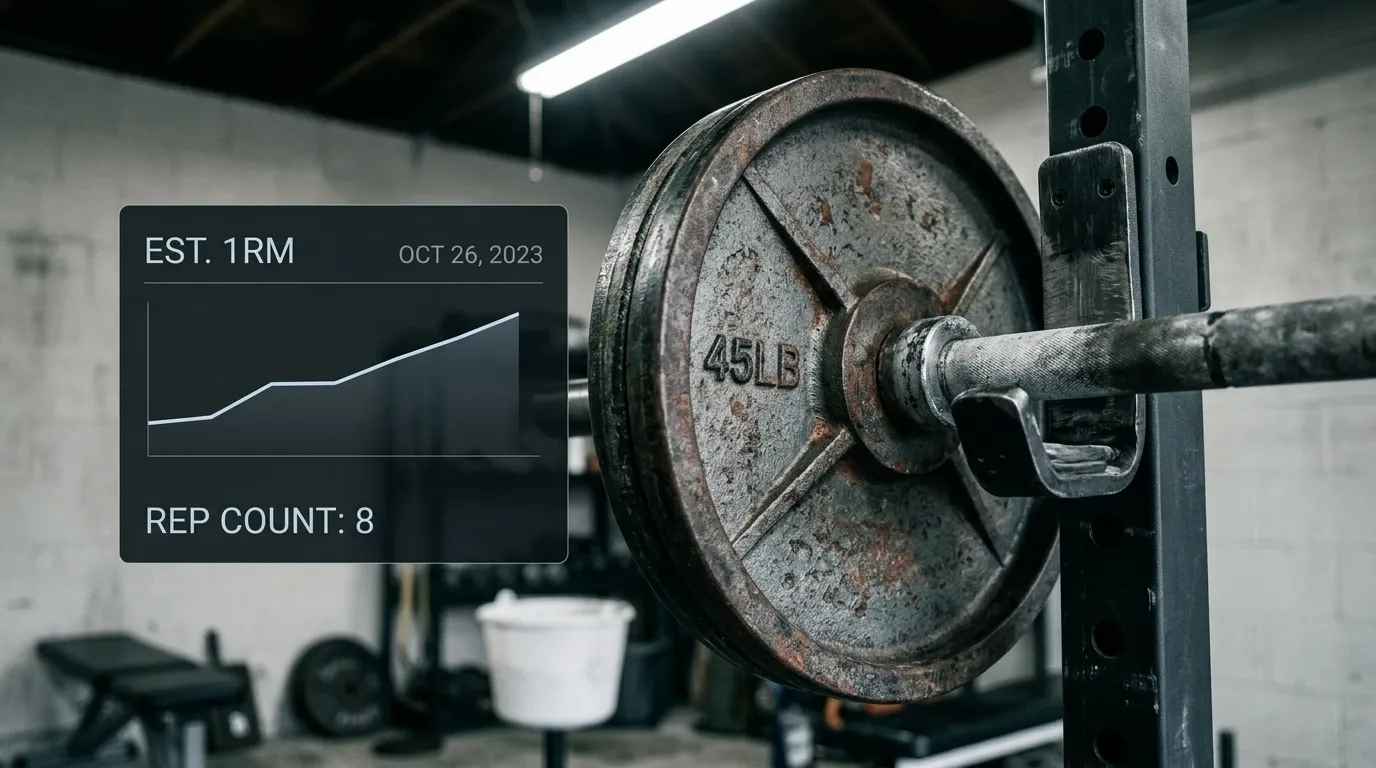
The last set of each 5/3/1 week is where most of the program’s magic happens — and where most lifters either leave gains on the table or blow themselves up chasing a big number. That final set, the AMRAP (as many reps as possible), is not a max-out test. It’s a calibration tool, a progress signal, and a built-in autoregulation mechanism all at once. Here’s exactly how to use it.
What the AMRAP Set Actually Is
In Wendler’s 5/3/1, each week’s main lift finishes with a working set at the prescribed percentage where the program notation shows a “+” — meaning you do at least the prescribed reps, then keep going. Week 1 is 5+, Week 2 is 3+, Week 3 is 1+. That plus sign is the AMRAP.
The purpose is twofold:
- Progress tracking — your rep count at a known percentage gives you a reliable estimated 1RM over time.
- Autoregulation — on a good day you’ll hit more reps; on a bad day fewer. The program flexes with your actual readiness instead of demanding a fixed output regardless of how you feel.
If you’re new to the terminology, the 5/3/1 Glossary has clean definitions for PR Set, Training Max, and every other acronym you’ll encounter in Wendler’s writing.
How Many Reps Should You Hit?
There’s no universal “correct” rep count, but there are useful benchmarks based on which week you’re in and what your Training Max (TM) is set to.
| Week | % of TM | Minimum reps | Healthy range | Red flag |
|---|---|---|---|---|
| Week 1 (5+) | 85% | 5 | 7–12 | <5 or >15 |
| Week 2 (3+) | 90% | 3 | 5–8 | <3 or >10 |
| Week 3 (1+) | 95% | 1 | 3–6 | <3 or >8 |
Hitting fewer than the minimum means your TM is probably set too high. Consistently hitting the upper end of the healthy range — or blowing past it — means your TM may be too conservative, or you’re ready to push progression faster.
Note: These ranges assume your TM is set at the standard 85–90% of your true 1RM. If you set it higher, expect lower rep counts. If you’re unsure where to set it, the 5/3/1 Training Max Calculator walks through the calculation in detail.
Technical Failure vs. Absolute Failure
This distinction matters more than rep count. Stop the AMRAP set when your technique breaks down — bar path drifts, depth disappears on squat, lower back rounds on deadlift — not when you physically cannot move the bar. That’s technical failure, and it’s the correct stopping point.
Going to absolute failure on compound barbell movements:
- Increases injury risk disproportionately
- Inflates your rep count with junk reps that don’t reflect real strength
- Creates excess fatigue that bleeds into your supplemental and accessory work
A clean set of 7 tells you more than a grinding, form-collapsing set of 10. Train for the data, not the ego number.
How AMRAP Results Feed Your Estimated 1RM
Every AMRAP set is an estimated 1RM data point. The Epley formula — weight × (1 + reps/30) — converts your rep-out into a projected max. This is how you track whether you’re actually getting stronger across cycles, independent of whether you’re testing a true 1RM.
For example: if you hit 225 lb × 8 reps on Week 1’s 5+ set, the Epley formula gives you an estimated 1RM of roughly 285 lb. Run that same calculation across multiple cycles and you have a trend line — the most honest measure of progress in the program.
This is also why calculating your estimated 1RM correctly matters. A single data point is noise; a trend across 8–12 weeks is signal.
What to Do With Your Rep Count After the Set
Your AMRAP result should inform two decisions: whether to adjust your TM at the end of the cycle, and how hard to push in future cycles.
If You Hit the Healthy Range
Continue as programmed. Add the standard 5 lb (upper body) or 10 lb (lower body) to your TM at the start of the next cycle. The program is working.
If You’re Consistently Crushing the Top of the Range
Two options: keep the standard progression and let the TM catch up naturally over time, or — if you’ve been conservative for several cycles — consider a slightly larger TM jump. Wendler’s general guidance is to avoid being greedy; the small jumps compound over years.
If You’re Hitting Minimums or Below
Your TM is too high. Don’t wait for a stall — reset proactively. A 10% TM reset feels like a step backward but typically results in faster long-term progress because you’re building from a solid base instead of grinding against a ceiling. The guide on breaking plateaus and resetting your TM covers exactly when and how to pull that trigger.
AMRAP Sets Across Different 5/3/1 Templates
Not every template uses the AMRAP the same way, and some remove it entirely.
5’s PRO eliminates the AMRAP altogether — every set is capped at 5 reps regardless of week. This is intentional: 5’s PRO is designed for higher-frequency or higher-volume setups (like Boring But Big) where the supplemental volume is the driver of progress, not the PR set. Masters lifters and anyone prioritizing recovery over peak intensity often run 5’s PRO for this reason.
Standard 5/3/1 with PR sets keeps the AMRAP on every main lift, every week. This is the default for most intermediate lifters and the setup where AMRAP tracking gives you the richest data.
Anchor blocks in the Leader/Anchor periodization structure typically reintroduce PR sets after a Leader phase run on 5’s PRO. The AMRAP in an Anchor is meant to be pushed — you’ve built a base, now you express it.
Tip: If you’re running a template like FSL or SSL alongside your main work, the AMRAP on the main lift still applies — it’s only the supplemental sets that change format. See the FSL vs BBB vs SSL comparison if you’re deciding which supplemental template fits your goals.
Common AMRAP Mistakes to Avoid
Treating every AMRAP like a max attempt. The set should feel hard but controlled. If you’re psyching yourself up, chalking up, and calling for a spotter every single week, you’re approaching it wrong. Save that energy for genuine PR attempts.
Ignoring the data. Logging your reps without ever looking at the trend is the most common waste of the AMRAP mechanic. If your Week 3 rep count on squat has dropped from 5 to 3 over three cycles, your TM needs a reset — but you’ll only catch that if you’re actually reviewing the numbers.
Skipping the AMRAP when you feel bad. A low-rep day is still useful data. Grinding out 3 reps instead of your usual 6 tells you something about recovery, sleep, stress, or TM calibration. Don’t skip it; just note the context.
Adding joker sets after a hard AMRAP. Joker sets (working up beyond the top set) are occasionally appropriate, but stacking them after an all-out AMRAP is a fast path to overreaching. If you’re going to run jokers, treat the AMRAP as a moderate effort, not a true max-out.
Tracking AMRAP Results Over Time
Manual logging works, but it creates friction — and friction leads to skipped entries. The value of AMRAP tracking compounds over months and cycles, so consistency matters more than precision on any single day.
The Train531 app logs your AMRAP reps automatically, calculates estimated 1RM using the Epley formula, and surfaces trends across cycles so you can see whether your strength is actually moving. The AI coach flags when your rep counts suggest a TM that’s too aggressive or too conservative — the kind of feedback that usually requires a coach to notice.
The AMRAP Is a Tool, Not a Test
Reframe how you think about the final set. It’s not a weekly max attempt. It’s a data collection event that happens to also build strength. Execute it with good technique, stop at technical failure, log the number, and let the trend tell you what to do next. That’s the whole mechanic — and it’s one of the reasons 5/3/1 keeps working for lifters years into the program when other approaches have stalled out.
Start Tracking Your AMRAPs Automatically
If you’re manually logging rep counts and trying to spot trends in a spreadsheet, you’re doing the hard part of 5/3/1 the hard way. Train531 handles AMRAP tracking, estimated 1RM trends, and TM progression automatically, and the AI coach tells you what your numbers actually mean. Free for 30 days, cancel anytime.